ServicesWhole-Home Filtration
Whole-Home Filtration in Peoria
Our carbon systems treat water at the point it enters your home, so showers, faucets and appliances all get water with less chlorine taste and smell. We match the tank to your peak flow, spell out what the media removes and what it leaves, and set the upkeep schedule before installation.
What a whole-home filter does, and what it doesn't
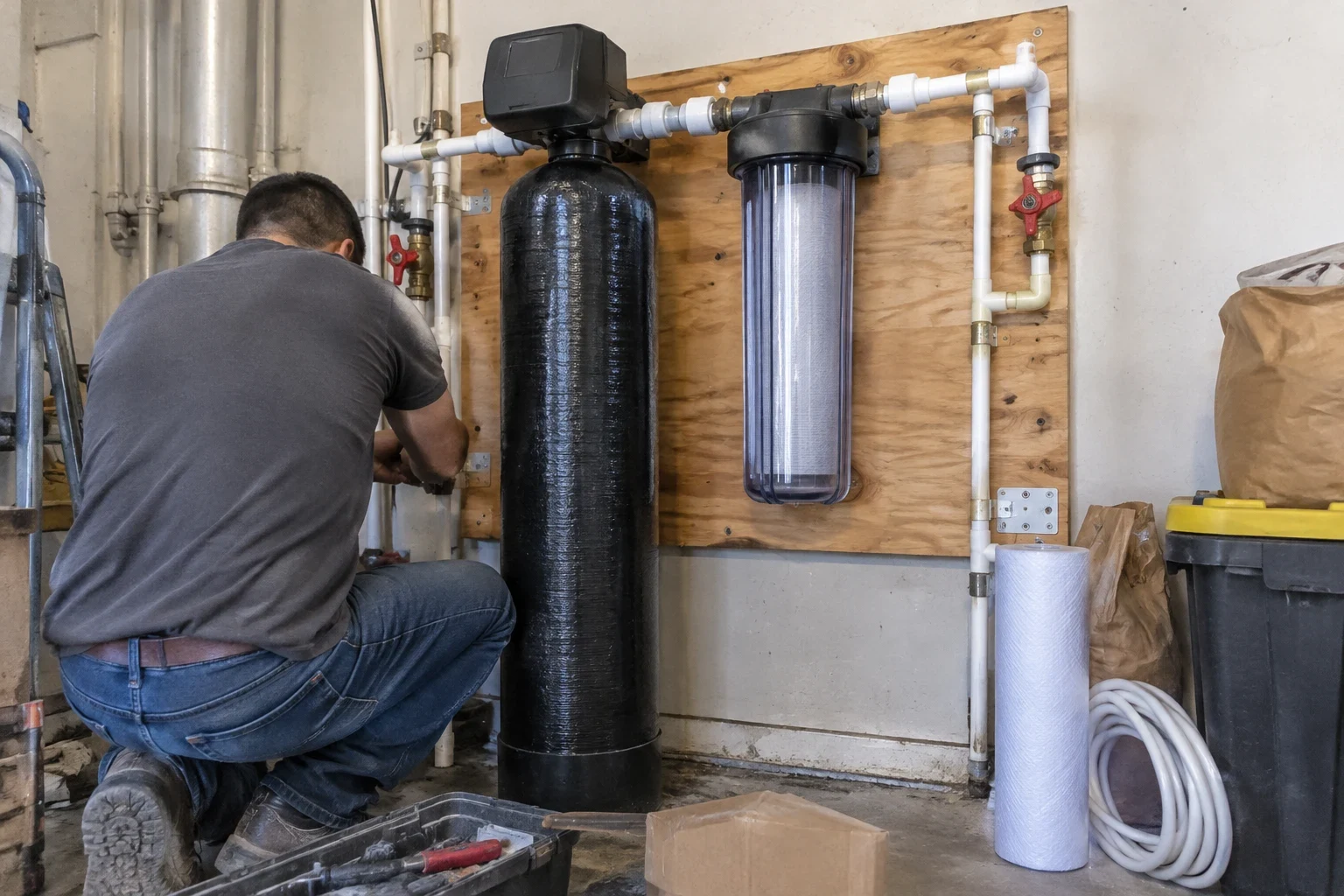
Your water utility adds a disinfectant, either chlorine or chloramine, to protect the water on its long trip through the mains. It does that job well, but the taste and smell follow the water into your shower, your ice maker and your coffee. A whole-home system is plumbed in at the point of entry, ahead of every branch line, and pushes each gallon through a bed of activated or catalytic carbon. Carbon adsorbs chlorine compounds and many taste and odor causes, so the difference reaches every tap, not just the kitchen.
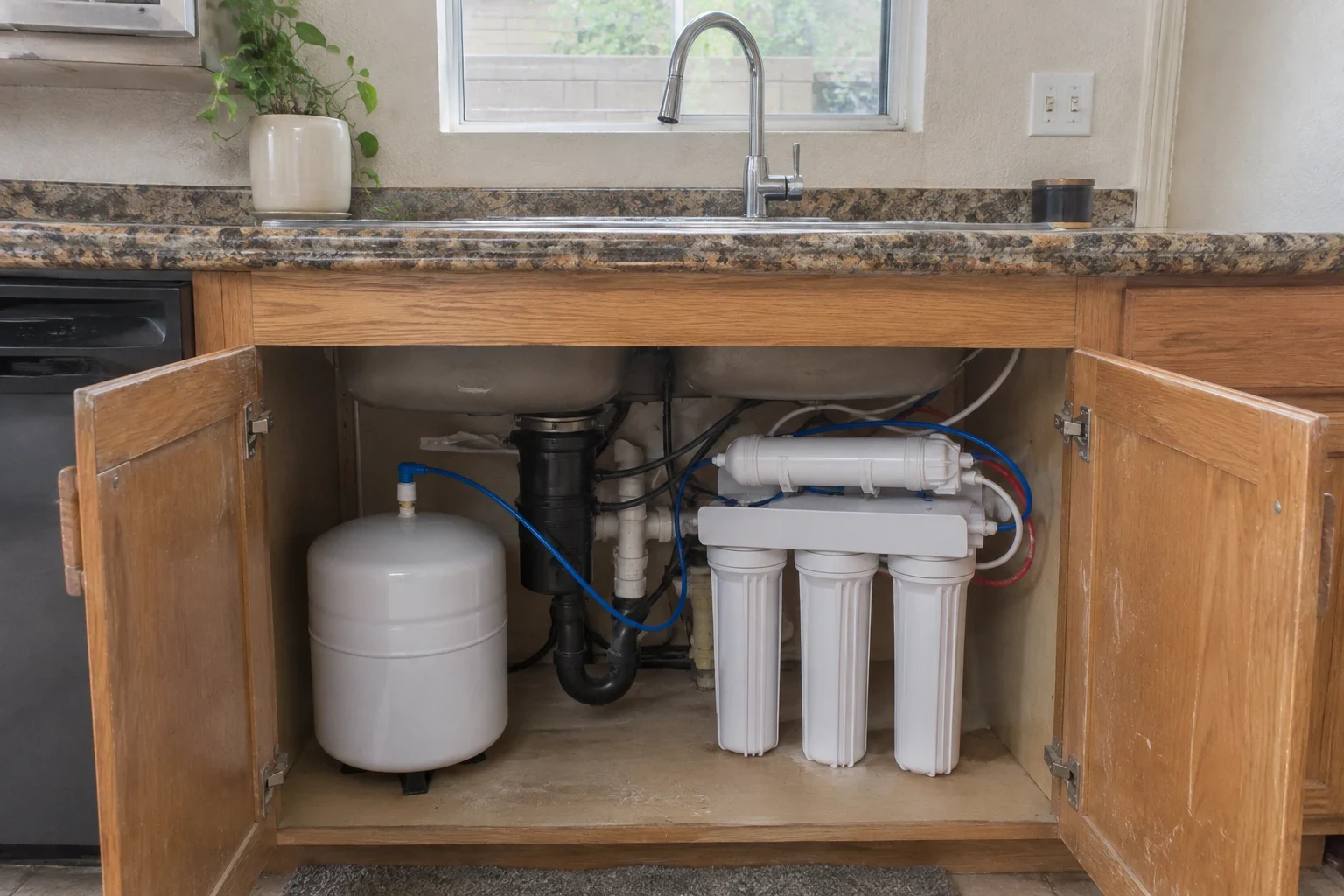
Carbon does not soften water. Calcium and magnesium pass straight through it, and Valley water is hard enough that scale on fixtures and inside water heaters is a common complaint. If scale is part of your problem, we'll talk through pairing the filter with water softener installation. If you want the purest drinking water, a reverse osmosis system under the kitchen sink handles that job better than any whole-home unit.
The best time to set this up is before a remodel, a water heater replacement or a move-in, when the plumbing is already open and you can budget for it on your own schedule.
What's included in the install
Sizing to your flow rate
We tally the showers, sinks, toilets and water-using appliances in your home and work out how many gallons per minute it pulls at its busiest moment. An undersized tank drops pressure when two showers run at once and exhausts its carbon early.
Sediment prefilter
A sediment stage catches grit and pipe scale before it reaches the carbon bed. That keeps the carbon from clogging and helps it last its full rated life.
Carbon media tank and control valve
We install a tank filled with activated or catalytic carbon, chosen for whether your water is treated with chlorine or chloramine. Catalytic carbon handles chloramine far better, so the choice matters.
Bypass valve and shutoffs
A bypass valve routes water around the tank during service, so your faucets and toilets keep working while we change media. Isolation valves on the inlet and outlet keep those changes quick and dry.
Clean connection to your main line
We tie in with fittings matched to your existing pipe, whether copper or PEX. Many homes here already have a soft water loop in the garage, which often simplifies the connection.
A written upkeep schedule
Before we leave, you get the prefilter change interval and the expected carbon replacement window, so you can budget for both well ahead of time.
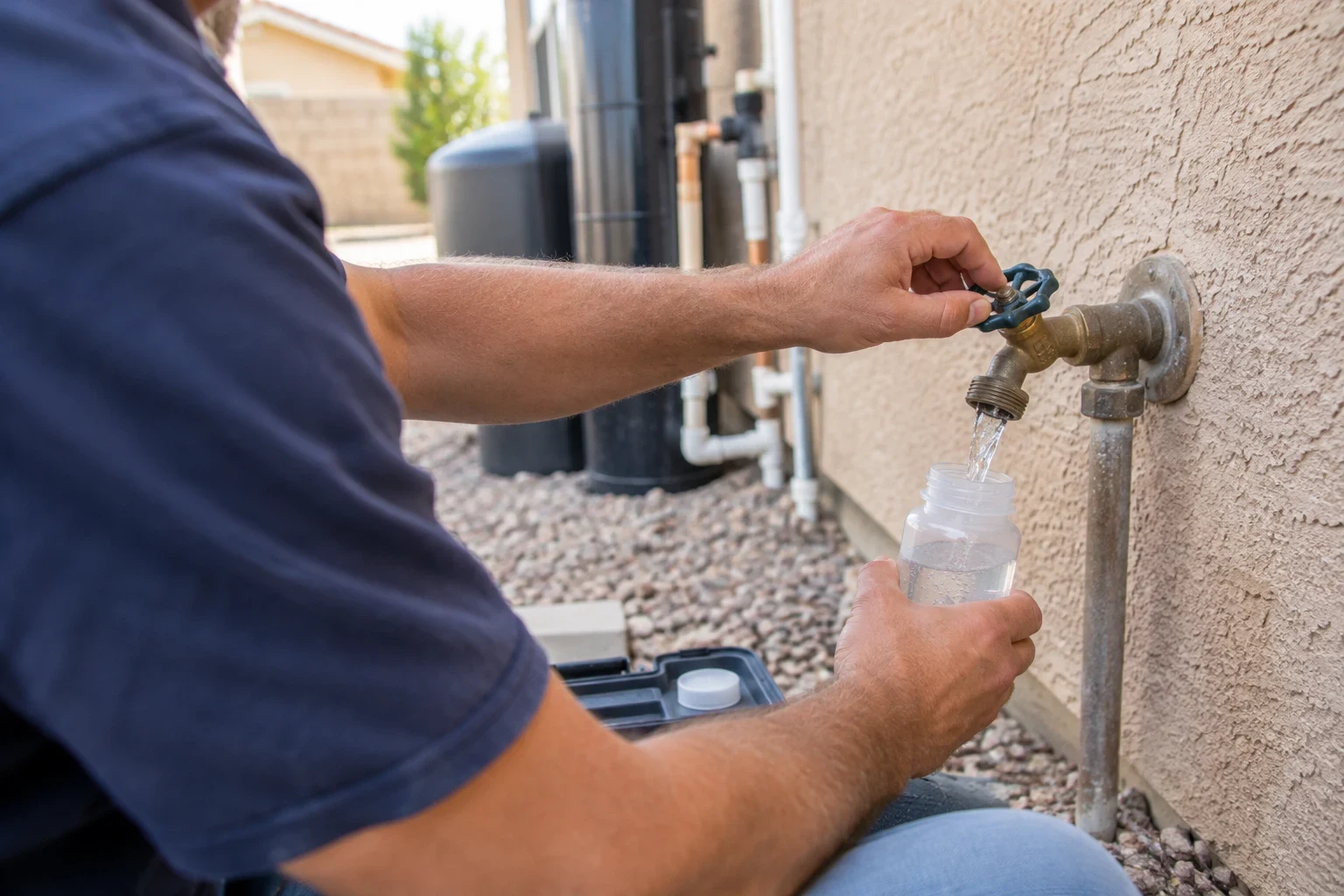
Signs your home could use whole-home filtration
- Pool smell in the shower
- Chlorine vaporizes in hot water, so the smell is strongest in a closed bathroom. Filtering only the kitchen tap won't touch it.
- Drinking water tastes off
- A chemical or flat taste usually points to disinfectant residual. Carbon reduces it at the source.
- Dry skin or hair after bathing
- Many people notice this most with chlorinated water. A whole-home filter treats the shower and the bath along with the faucets.
- Pitcher filters can't keep up
- If you're buying cartridges constantly and still running unfiltered water everywhere else, one system on the main line is simpler to plan for.
- You're adding a softener anyway
- Installing carbon ahead of a softener protects the resin from chlorine over time. Doing both together saves a second plumbing visit.
How the work goes
- 1
A phone conversation first
We ask about your home's size, bathrooms, pipe material and what's bothering you about the water. We also look at the city's published water quality report so we pick the right carbon type.
- 2
A written estimate
You get a line-item estimate covering the equipment, the connection work and the ongoing media costs. Nothing gets installed until you've seen what the next several years of upkeep look like.
- 3
The installation
With drop cloths down around the work area, we close the main valve, then plumb in the bypass assembly and the filter tank. Where a loop already exists, the work typically wraps up within a few hours, and the main stays shut only while we make the tie-in.
- 4
Startup and flush
New carbon releases fine dust, so we backwash and flush the tank until the water runs clear. Then we check pressure at a few fixtures and walk you through the bypass.
What moves the cost
The price depends on how much water your home uses at once, what's already plumbed at the entry point and which media your water needs. We'd rather you know the full picture, including future media changes, than get surprised in year three.
- Tank size
- More bathrooms mean higher peak flow and a larger carbon bed. Larger tanks cost more up front but go longer between media changes.
- Carbon type
- Standard activated carbon costs less. Catalytic carbon is the right choice for chloramine and is priced higher.
- The connection point
- An existing soft water loop makes the tie-in straightforward. If we need to run a new loop or reroute pipe, labor and materials go up.
- Pairing with other equipment
- Adding a softener or an RO system in the same visit shares the plumbing work, which usually costs less than two separate jobs.
- Ongoing upkeep
- Prefilter cartridges and periodic carbon replacement are part of owning the system. We list both in your estimate so you can plan for them.
Whole-home filtration questions
- Will a whole-home carbon filter fix hard water?
- No. Carbon grabs chlorine along with a range of compounds that affect taste and smell. Calcium and magnesium are dissolved minerals it can't hold onto, so they flow right past the media. For scale on fixtures and appliances you need a softener. Many homeowners install both, with the carbon tank placed first.
- How long does the carbon last?
- It depends on the tank size, your household's water use and how much disinfectant is in the water. A properly sized tank typically goes several years between media changes. We give you an expected window at install so you can budget for it.
- Will it lower my water pressure?
- A correctly sized system should cause only a small pressure drop you won't notice in daily use. Problems usually come from tanks that are too small for the home. That's why we size by peak flow, not just square footage.
- Is there a warranty?
- If you pair the filter with one of our water softeners, the softener carries a 15-year warranty on the resin. Placing carbon ahead of the softener also helps protect that resin from chlorine over the years. We'll explain the coverage on the filter equipment itself when we go over your estimate.
- Do I still need a drinking water system?
- Not always. Plenty of households find that carbon-treated water from the kitchen faucet tastes good enough for drinking and cooking. If you want lower dissolved minerals in that water too, a reverse osmosis system under the sink handles the final step.
Plan your filtration before the next project
Tell us about your home and what you're noticing in the water. We'll explain which system fits, what it costs to own and when the upkeep comes due.