ServicesReverse Osmosis
Reverse Osmosis System in Peoria, AZ
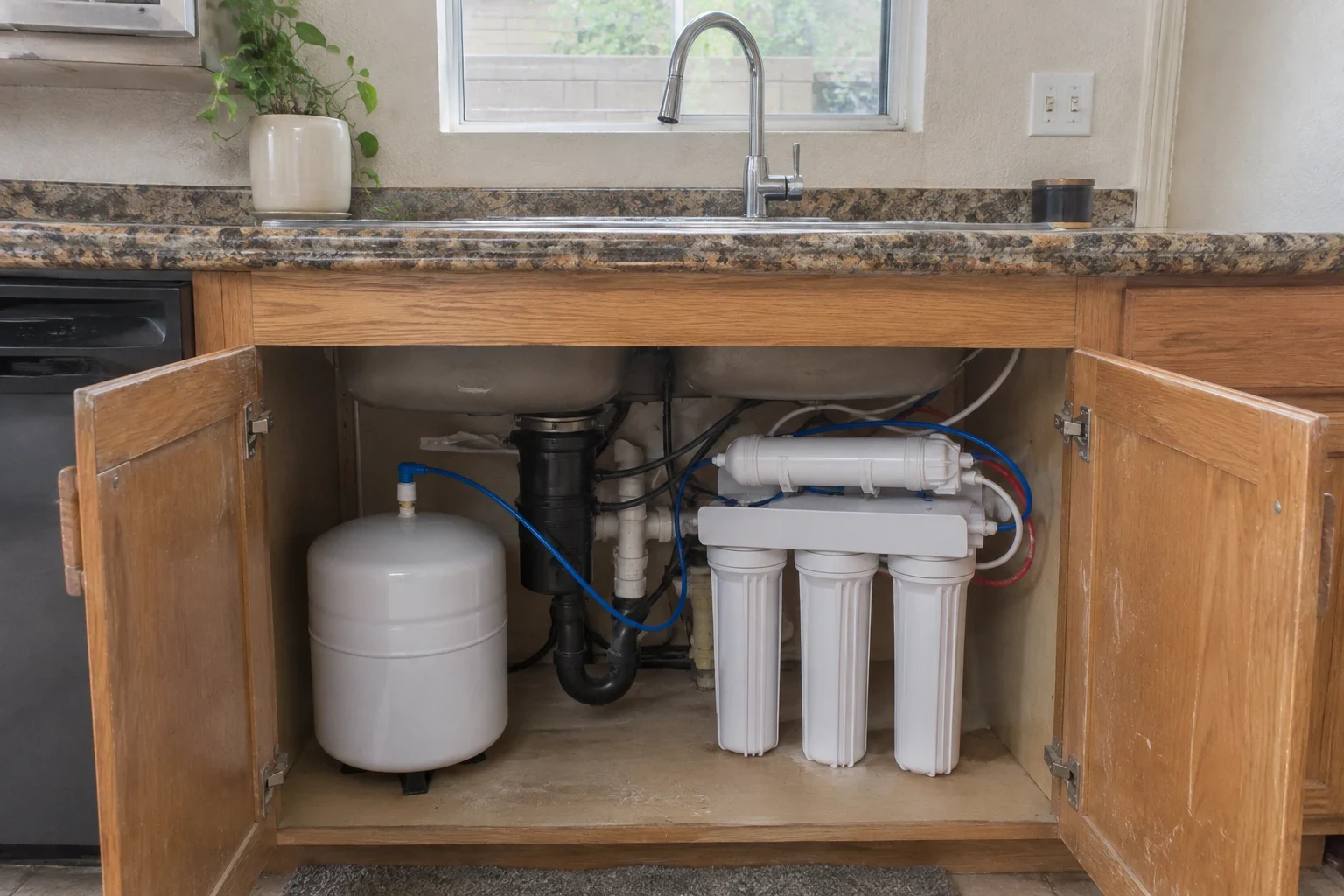
Your drinking and cooking water passes a sediment stage, carbon blocks and a thin-film membrane before it reaches its own faucet at the sink. We size the storage tank to your kitchen and hand you a filter-change schedule, so next year's cartridge cost is known well ahead.
What a reverse osmosis system does in your home
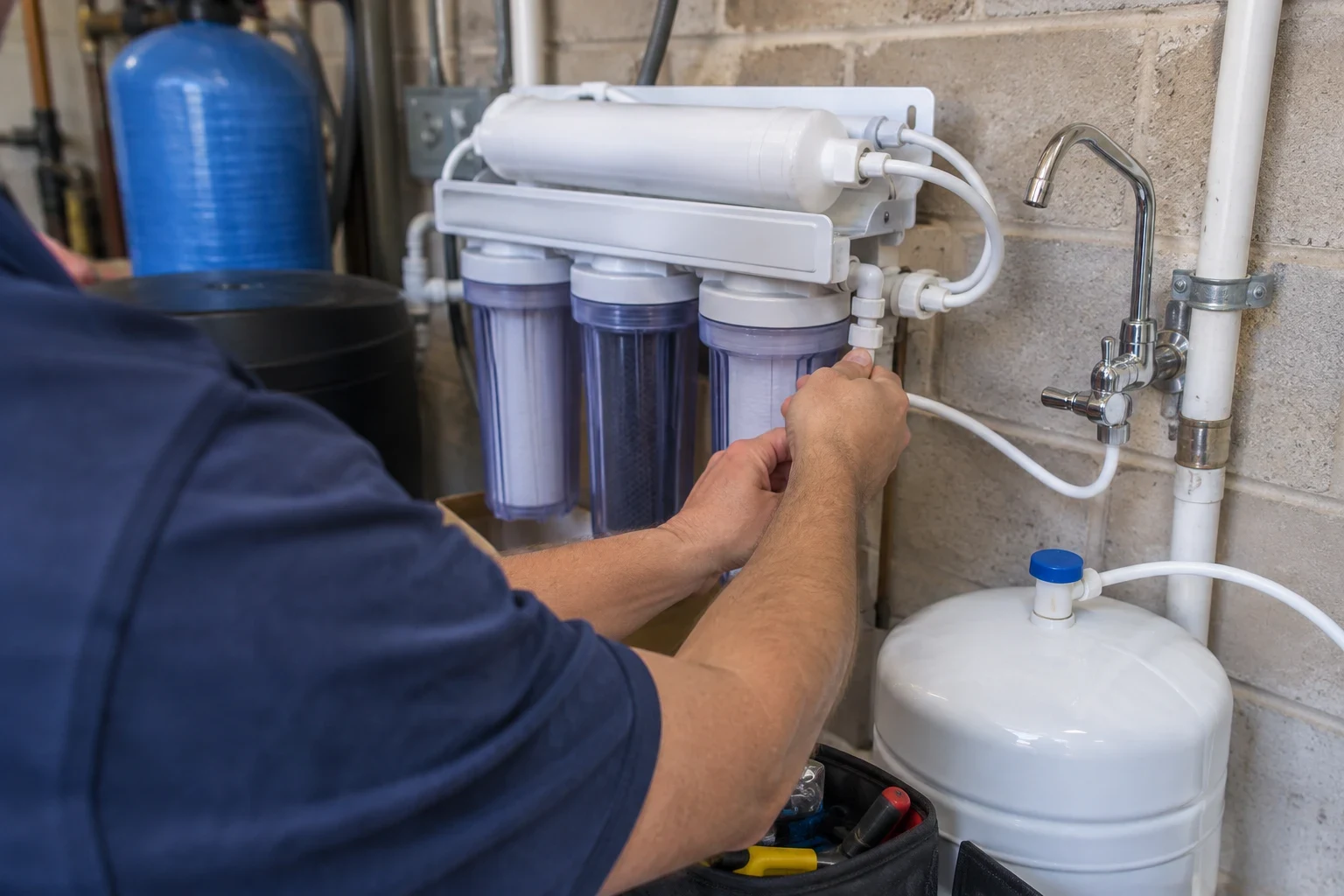
A reverse osmosis system is a point-of-use filter, usually mounted inside the kitchen sink cabinet. Water first passes a sediment prefilter that catches grit and rust flakes, then a carbon block that strips chlorine. Next it is pressed through a thin-film composite membrane that holds back most dissolved salts and minerals. Filtered water collects in a small pressurized tank and feeds its own faucet.
It is the right call when the taste of tap water bothers you, when cases of bottled water keep showing up in the cart, or when you want fewer dissolved solids in the water you drink and cook with. Water in Peoria and across the West Valley runs hard and mineral-heavy, which is why glasses spot and coffee can taste flat. RO handles the glass you drink. A water softener or whole-home filtration handles the rest of the house.
We prefer to plan RO alongside any other water work, so the cabinet layout, the drain connection and the filter schedule get settled once instead of piecemeal.
What the installation includes
- 01
Staged filter assembly
A sediment prefilter, one or two carbon blocks, the RO membrane and a polishing carbon postfilter. We match the stage count to what you want removed rather than adding stages for show.
- 02
Feed valve and drain saddle
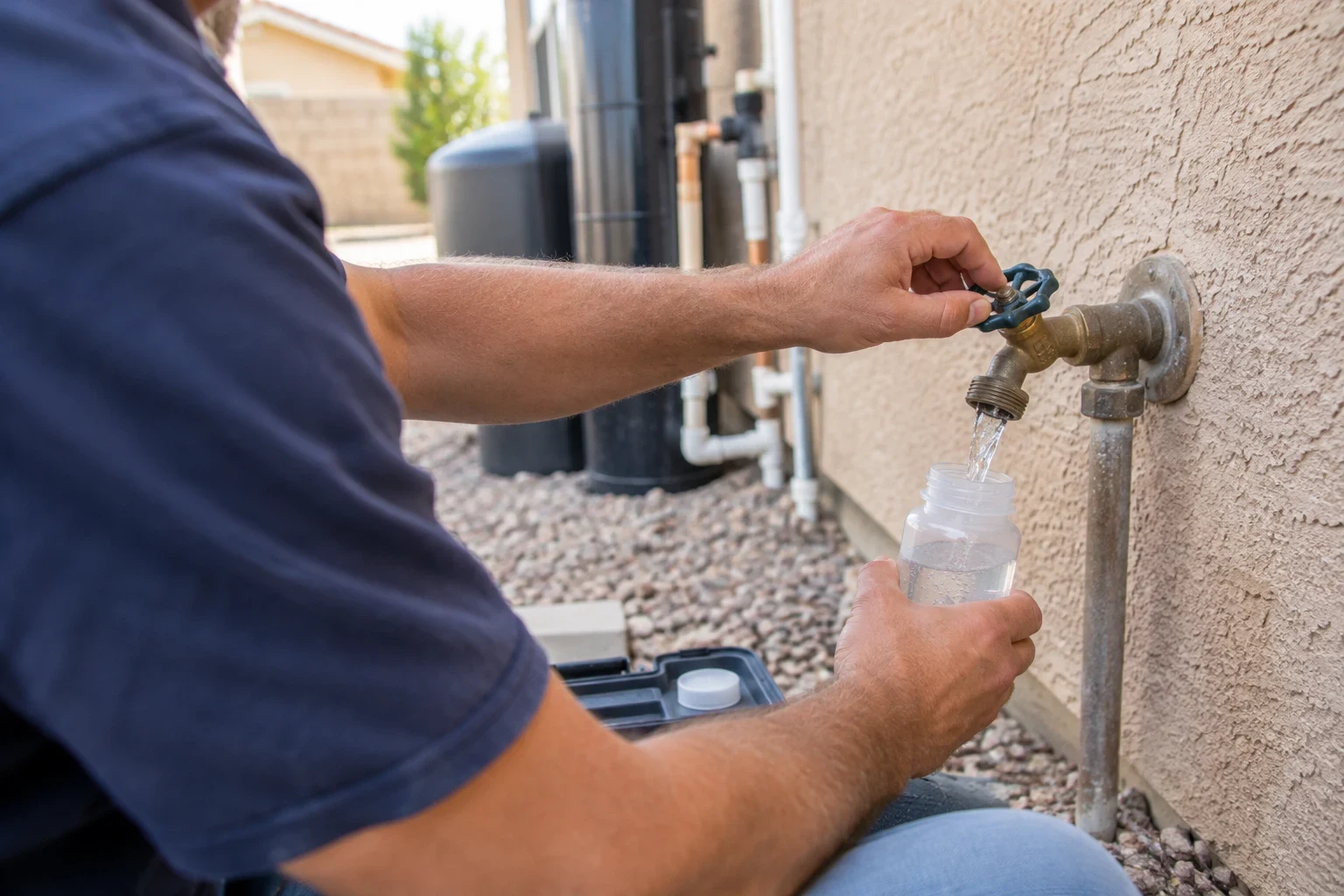
We tap the cold supply with a feed-water adapter and its own shutoff. The drain saddle clamps to the sink tailpiece above the P-trap, so reject water leaves cleanly and cannot siphon back.
- 03
Pressure-checked storage tank
The bladder tank's air precharge is checked with a gauge before it fills. A low precharge is the most common reason for a weak stream at the faucet, so we set it right on day one.
- 04
Dedicated faucet
When the sink deck has an unused hole left by an old sprayer or a soap dispenser, we mount the new faucet in it. Granite and quartz tops get a fresh hole from a diamond core bit cooled with water, which keeps the stone edge from chipping.
- 05
Refrigerator or ice maker line
If you want filtered ice and fridge water, we tee a line off the RO output and run it to the appliance. Tubing is routed so it will not kink when the fridge slides back.
- 06
Flush, leak check and schedule
We flush carbon fines, dump the first tank and recheck every push-fit fitting under pressure. You keep a written schedule of filter-change dates.
Questions about Reverse Osmosis?
Call(623) 400-3457Signs an RO system makes sense
Chlorine in your coffee or tea
Hot water releases chlorine odor, so it shows up in the mug first. The carbon stages remove it before the water reaches the membrane.
White crust on the kettle
Scale in the kettle and spots on glassware come from dissolved calcium and magnesium. RO pulls most of those minerals out of the water you drink.
Bottled water by the case
If you haul jugs home every week, a tap that delivers filtered water on demand usually pays its way and frees up garage space.
Your current RO has slowed down
A slow fill or a tank that empties in seconds points to a fouled membrane or a lost tank precharge. We will tell you plainly whether new filters or a new system is the better spend.
Pitcher filters adding up
Pitcher and faucet-mount cartridges treat small volumes and need frequent swaps. An under-sink system handles cooking water too, on a slower change cycle.
How the job runs
- 1
A planning call
On the phone we ask about your sink cabinet, countertop material, garbage disposal, fridge line and whether you already have a softener. That is enough to give you your quote by phone and pick a system.
- 2
Cabinet prep
We clear the cabinet, lay down a towel, shut the cold supply and mount the filter bracket where you can reach the housings later without unloading everything.
- 3
Connections
The feed adapter, drain saddle and faucet go in, and tubing is cut square so each push-fit seals fully. A crooked cut is the usual source of a slow drip months later.
- 4
Fill, flush and recheck
The first tank is dumped to clear carbon fines. We recheck fittings after the system has sat under pressure, wipe down the cabinet and leave the schedule taped inside the door.
What moves the cost
Price depends on the system you choose and on your kitchen. We explain every line on the phone so you can budget for the install and the yearly filters together, with no surprise add-ons when we arrive.
- System features
- A permeate pump, a remineralization stage or a booster pump for low incoming pressure each add cost. We only recommend them when your setup calls for them.
- Countertop and faucet
- Using an existing hole costs less than core-drilling stone. Faucet finish also changes the price.
- Appliance line run
- A fridge right next to the sink is a short run. A fridge across the kitchen may need tubing routed through cabinets or the floor.
- Cabinet space
- A crowded cabinet with a disposal and a hot water dispenser takes more layout work and sometimes a slimmer tank.
- Ongoing filters
- Prefilters and the membrane are a recurring cost. We list them up front so you can plan for them each year.
Reverse osmosis questions
How much water goes down the drain with reverse osmosis?
Some does. Part of the incoming flow rinses the rejected minerals off the membrane surface and carries them out through the drain line. The ratio of filtered water to reject water depends on the system's design and the pressure coming into your home. A permeate pump cuts that reject volume noticeably, and we can add one if it matters to you.
Will RO fix the hard water in the rest of the house?
No. RO treats only the water at its own faucet and any line we run to the fridge. Showers, the water heater and appliances still see hard water. For that, look at our Water Softener Installation page.
Should I pair RO with a water softener?
It often helps. Hardness scales the RO membrane, so softened feed water usually lets the membrane last longer. The softeners we install carry a 15-year warranty on the resin, the bead bed that does the softening, which makes the pairing easier to plan long term.
How often do filters need changing?
As a general guide, the sediment and carbon prefilters are changed every 6 to 12 months and the membrane every 2 to 5 years, depending on your water and how much you use. Your written schedule gives the dates for your system.
Does RO water taste flat?
Some people notice it, since the membrane strips out most of the minerals. An optional cartridge mounted after the membrane can return a trace of calcium and magnesium for a rounder taste. We can fit one during the install.
Put your drinking water on a schedule
Tell us about your sink and countertop, and we will lay out the system, the install and the yearly filter cost before anything is booked.