ServicesWater Softener Installation
Water Softener Installation in Peoria
We install water softeners sized to your home's hardness and daily water use, plumbed into your existing loop or a new one, and set up so they regenerate only when needed. You get a clear plan and a known cost before scale takes out a water heater.
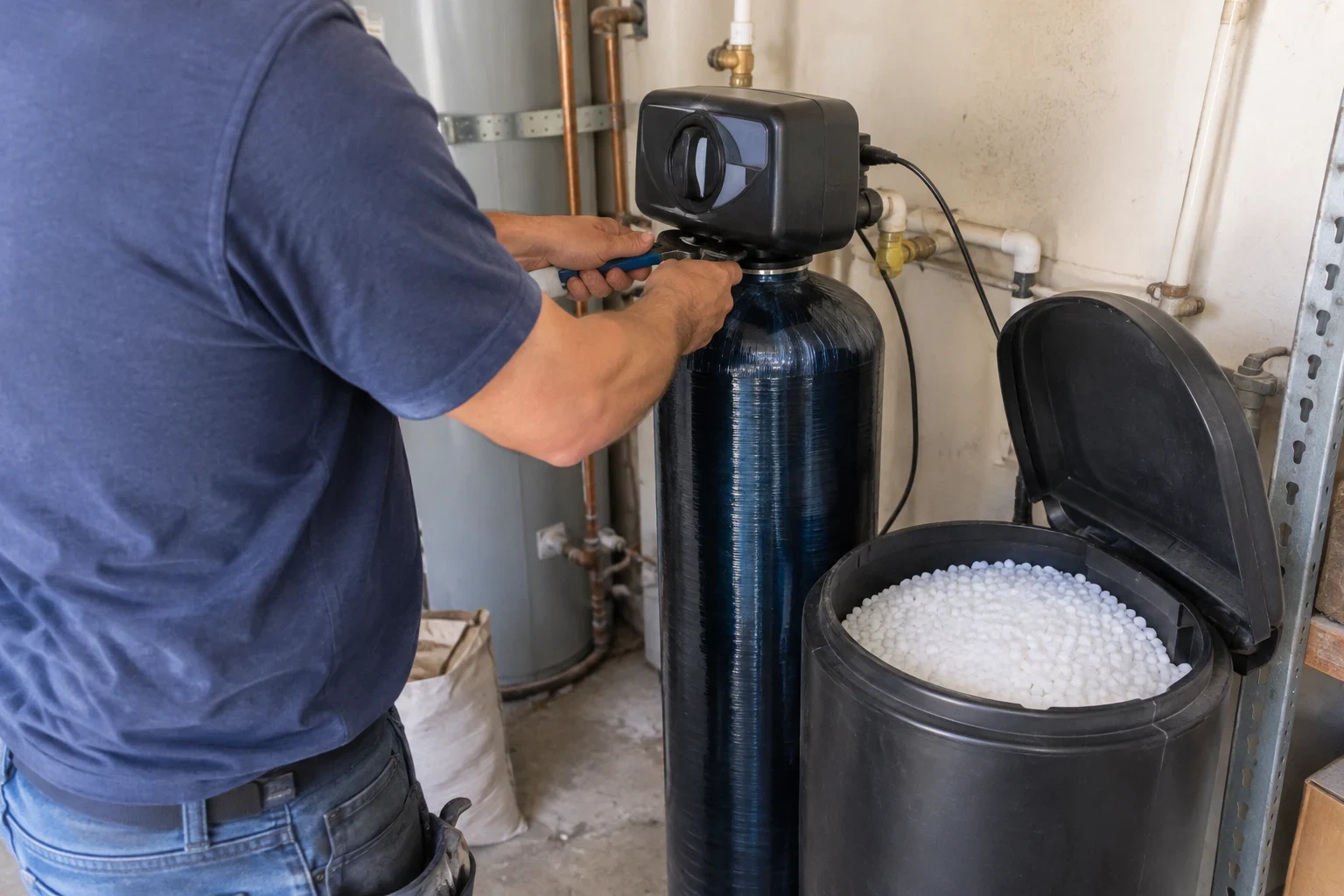
What a softener actually does
Hardness is calcium and magnesium carried in solution. Heat a gallon of it in a water heater, or let a few drops dry on a fixture, and those minerals come out of solution as scale. It coats heating elements, narrows tankless heat exchangers, clouds shower glass and clogs faucet aerators. Inside a softener, water flows through a tank of ion exchange resin that trades the calcium and magnesium for sodium or potassium, so there is nothing left to form scale.
Hard water is common across the West Valley, so most homes here benefit from treatment. The better question is timing. A softener installed before a water heater fails costs less overall than one added after a rushed heater replacement, and it lets you pick the equipment instead of taking whatever is in stock that day. We help you budget for it on your schedule.
What your installation includes
Sizing by grain capacity
We work from the number of people in your home, your typical daily water use and the hardness figure your water provider publishes. That sets the resin volume and grain capacity. An undersized tank regenerates too often and wastes salt; an oversized one can let resin sit and channel.
Metered, demand-initiated control valve
The valve counts gallons and regenerates only after the resin reaches its set capacity, not on a fixed clock. That keeps salt and backwash water use in line with what your home actually uses.
Plumbing tie-in and bypass
Many homes in the area already have a softener loop in the garage, and we connect to it. If yours does not, we explain what a new loop involves before any work starts. Every install gets a bypass valve so you can isolate the unit without shutting off water to the house.
Drain line and brine tank
The backwash drain is run to an approved drain with a proper air gap so wastewater cannot siphon back. The brine tank gets an overflow line, the first salt fill and a programmed first regeneration.
Resin backed for the long term
The resin in the units we install carries a 15-year warranty on the resin. Resin is the part that does the softening, so that coverage protects the core of the system.
Signs it is time to plan a softener
- White crust on fixtures
- The dull white film on faucet handles, shower heads and glass enclosures is calcium carbonate left behind as water evaporates. When it comes back within days of a good scrub, the same minerals are collecting inside your pipes and appliances too.
- A water heater that pops or rumbles
- Hard minerals drop out as the water heats and pile up in a crusty layer across the floor of a tank heater. Small pockets of water get caught beneath that layer and boil into steam bubbles, which is the popping you hear. It means the burner or element runs longer than it should to heat the same water.
- Frequent tankless descaling
- If your tankless heater shows scale-related error codes or needs flushing more often than its manual calls for, hardness is the cause. Softening the water before it reaches the unit protects the heat exchanger.
- An old softener that uses salt but not softening
- Worn resin, a failing valve seal or a stuck injector can leave a unit cycling without removing hardness. When spots and crust return even though the salt level keeps dropping, replacement is usually the honest answer.
- Soap that will not lather
- Calcium and magnesium bind with soap and leave scum behind. You end up using more detergent, and laundry comes out stiff and dull.
How the work goes
- 1
Phone conversation
We ask about household size, your current plumbing setup, any existing softener and what you are seeing. From that we can talk through unit size, likely scope and timing so you can budget.
- 2
Site look and written plan
We confirm the loop location, drain access and electrical outlet. You get a written plan that lists the unit, the plumbing work and the cost before anything is scheduled.
- 3
Installation day
Water is shut off only for the tie-in. We install the bypass, connect the resin tank and valve, run the drain with an air gap and set up the brine tank. Most of the visit is setup and testing, not time without water.
- 4
Programming and handoff
We enter your hardness and capacity settings into the valve, run the first regeneration and watch every fitting under pressure for drips. Before we leave, you learn how to flip the bypass, where the salt line should sit in the brine tank and what the valve display is telling you. The work area is swept and the old packaging hauled out.
What moves the price
Softener cost depends mostly on capacity and on how much plumbing the job needs. We price the unit and the labor separately on the written plan so you can see where the money goes. Knowing these factors early lets you set the budget aside before an appliance forces the decision.
- Unit size and valve type
- Higher grain capacity means more resin and a larger tank. A metered valve costs a bit more up front than a timer valve but usually saves salt and water over the years.
- Existing loop or new plumbing
- Connecting to an existing loop is straightforward. Running a new loop, or rerouting around a water heater or tight garage wall, adds labor and material.
- Removing an old unit
- Disconnecting and hauling away an old softener and its brine tank adds time. A worn bypass or corroded fittings found during removal are noted and priced before we replace them.
- Add-on equipment
- Some homes pair a softener with a carbon stage from our whole-home filtration service, which also shields the resin from chlorine. That is optional and priced as its own line.
Water softener installation questions
- How long does installation take?
- Swapping a unit onto an existing loop usually takes part of a single day. A new loop or a hard-to-reach drain adds time. We give you the expected length of the visit when we write the plan.
- How much salt will the softener go through?
- Salt use comes down to three things: how much water your household runs, how hard that water is and the grain capacity of the unit. Because a metered valve only regenerates after a set number of gallons, it burns through less salt than a clock-timed unit. If carrying 40-pound bags to the garage is the part you dread, our automated salt delivery service keeps the brine tank filled for you.
- What does the resin warranty cover?
- The resin in the softeners we install comes with a 15-year warranty on the resin. Resin is the exchange media that removes hardness, and it is the part most likely to wear out on older units.
- Is softened water good for drinking?
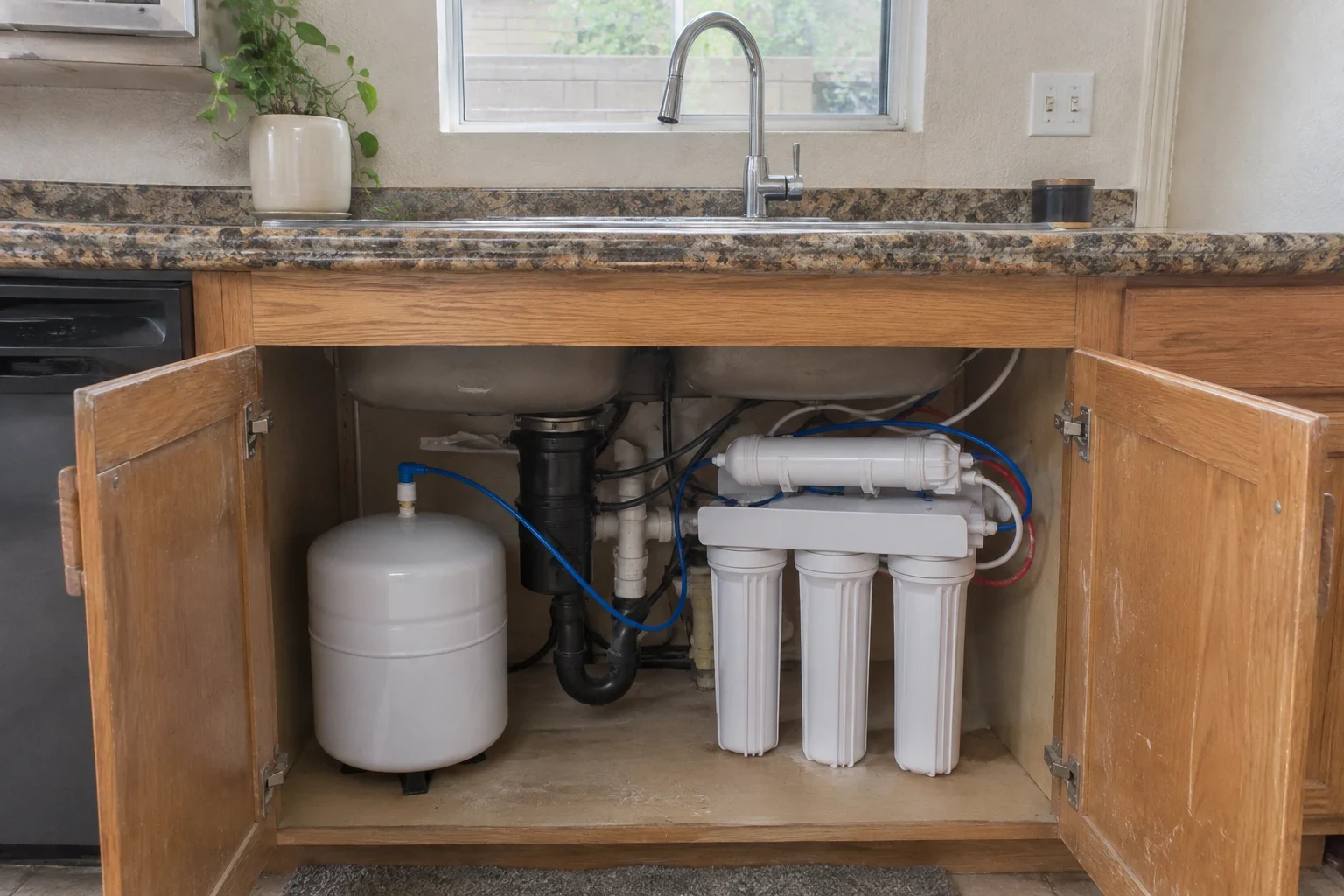
- Softening adds a small amount of sodium, or potassium if you use potassium chloride. Many households add a reverse osmosis system at the kitchen sink for drinking and cooking water, which removes that sodium along with other dissolved solids.
- Can you replace my existing softener with a different brand?
- Yes. We take out the old unit and brine tank and connect the new system to your loop. If the existing bypass or fittings are worn, we show you and give you a cost before replacing them.
Get your softener on the calendar before scale does the deciding
A short phone call covers your home, your current setup and what a properly sized system involves. You leave with a plan and a number you can budget around.